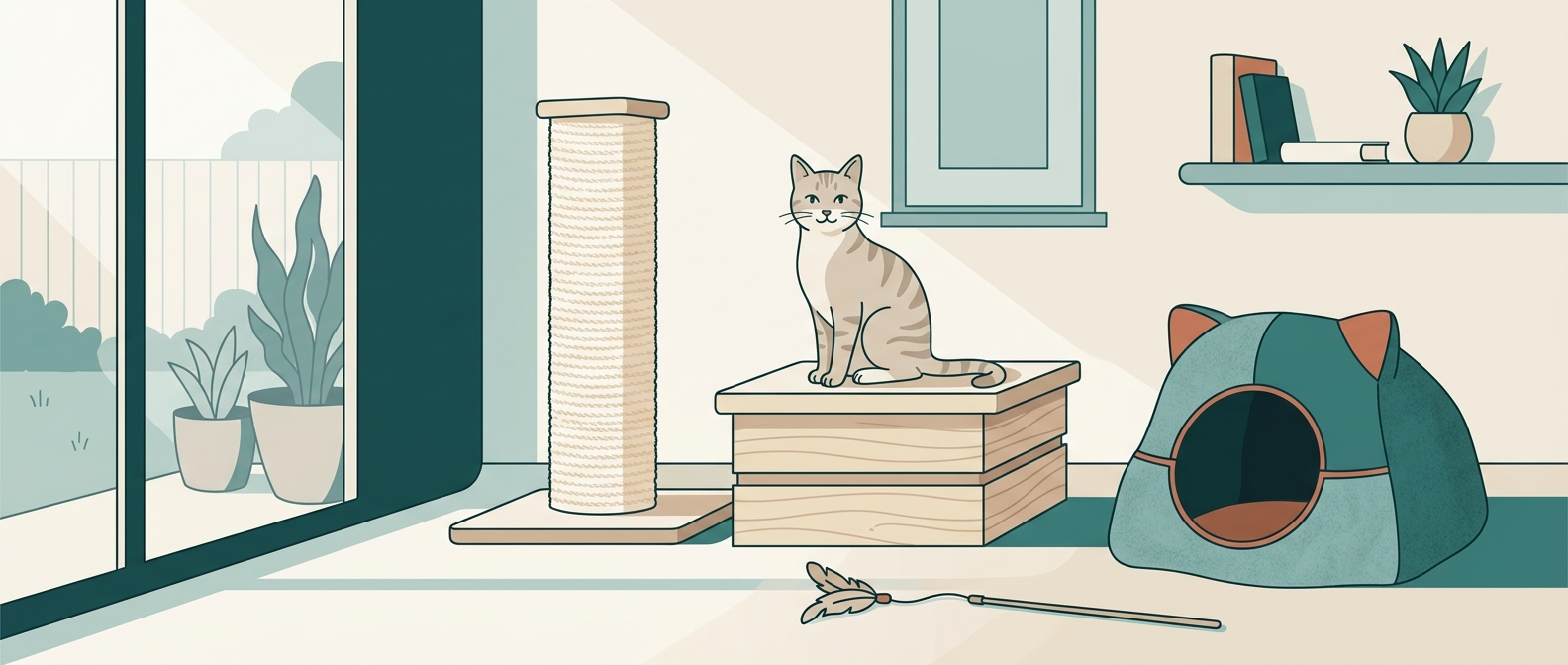
Good enrichment gives a cat safe ways to play, forage, scratch, climb, hide, rest, and choose whether to join in. Start with a predictable 10–15 minute routine and one familiar activity, then adjust to your cat’s age, health, mobility, food plan, and preferences. Enrichment supports welfare and daily quality of life; it is not a cure for illness, pain, severe fear, or cat-to-cat conflict. AAHA resources describe interactive toys, scratching, climbing, hiding, puzzle feeders, and vertical space as useful parts of an indoor cat’s environment. AAHA: Purrfectly Entertained · AAHA: Enrichment at home
Vet-first note: enrichment is not an explanation for a sudden change
Contact your veterinarian promptly for a new or persistent change in appetite, drinking, activity, hiding, grooming, mobility, behavior, or litter-box use. If your cat is repeatedly straining to urinate, producing little or no urine, crying out, showing blood in urine, vomiting, weak or collapsed, or in severe pain, contact a veterinarian or emergency clinic now. Do not use play, food puzzles, or a calming corner to delay care. AAHA: Why isn’t my cat using the litter box? · AAFP/ISFM house-soiling guideline
What does calm-cat enrichment include?
Enrichment is not about filling a room with toys. It is about making safe, workable choices available in the home you already have. That might mean movement, hunting-like play, food exploration, scratching, climbing, hiding, watching, resting, or social contact—and it always includes the option to say no.
| Enrichment area | Low-pressure option | Watch for | Adjust or stop when |
|---|---|---|---|
| Play | A wand toy moved like small prey, with pauses and a finish | Stalking, batting, chasing, or calmly watching | The cat repeatedly leaves, becomes frustrated, or is overstimulated |
| Food/foraging | Part of the normal meal in a very easy puzzle or a few safe hiding spots | Sniffing, searching, and eating without distress | The cat cannot access food, guards it, or the activity disrupts the food plan |
| Climbing/height | A stable cat tree, shelf, or cleared safe surface | Choosing a high place and leaving freely | The surface wobbles, the jump is unsafe, or another cat controls the landing |
| Hiding | An open box, covered bed, or quiet nook with an exit | Resting, observing, and emerging by choice | The hide is a dead end, inaccessible, or used alongside illness signs |
| Scratching | Stable vertical and horizontal surfaces near preferred resting routes | Stretching, scratching, and returning to the surface | The post tips, the material is rejected, or paws/skin look painful |
| Choice and routine | Predictable activity windows plus uninterrupted quiet time | The cat approaches, declines, returns, or chooses another option | People force contact or every activity is changed at once |
Plain-text summary: calm enrichment combines movement, food exploration, height, hiding, scratching, rest, and choice. The best activity is the one your cat can use safely and voluntarily; more stimulation is not automatically better.
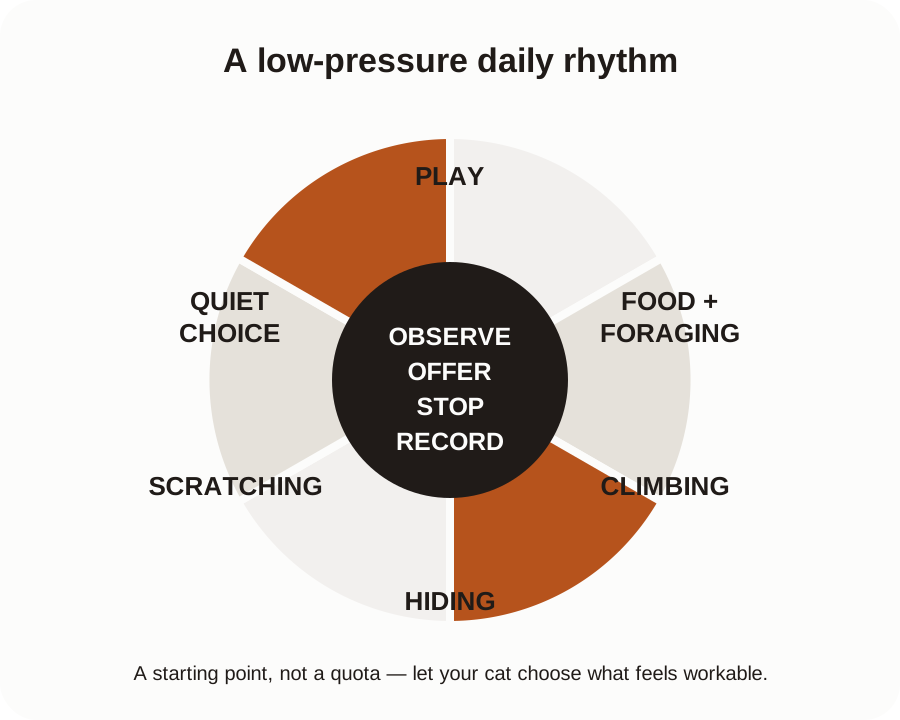
How can I build a simple daily enrichment routine?
Think rhythm, not a demanding timetable. This is a starting template, not a quota your cat has to meet:
- Morning: predictable food and observation. Serve the usual food safely. If your veterinarian has not restricted food puzzles, place a small part of the normal meal in an easy puzzle or scatter it in a few obvious locations. Keep fresh water and ordinary feeding access available.
- Midday: quiet choice. Leave one familiar scratcher, box, perch, or resting area available. Do not wake, pull out, or handle a resting cat for enrichment.
- Evening: short interactive play. Move a wand or toy in brief prey-like bursts with pauses. Let the cat catch the toy at the end, then offer the normal post-play food routine if that suits the household.
- Night: low stimulation. Rotate only one safe item if the cat enjoys novelty. Otherwise, keep the environment predictable and let the cat settle.
Keep one activity in place for several days. Notice whether your cat approaches it, uses it, ignores it, or avoids it. A small choice that stays familiar can be more useful than a room full of new things.
How do I use play without making a cat more stressed?
Play works best as an invitation. Move a suitable toy away from your cat, pause, and see whether they choose to follow. Keep hands and feet out of the game, and supervise toys with strings, ribbons, feathers, or small detachable pieces. AAHA describes interactive play as one part of indoor enrichment alongside routine veterinary care and other environmental options. AAHA: How often should you play with your cat?
If your cat walks away, hides, gets repeatedly frustrated, or seems overwhelmed, call it a day. Lack of interest is not defiance. On another day, try a different movement, time, distance, or a familiar toy—or leave room for quiet instead.
Are food puzzles useful for every cat?
Food puzzles can offer foraging and problem-solving, but only if they are easy enough for this cat. Begin with a shallow, easy-to-reach puzzle and use part of the normal meal, not a large extra serving of treats. Keep ordinary food access available. Ask your veterinarian for guidance if your cat has a prescribed diet, weight concern, dental pain, swallowing concern, or a history of guarding food.
| Puzzle level | Example | A useful success signal | Do not progress if |
|---|---|---|---|
| Level 1: obvious | A few pieces in an open tray or cardboard egg carton | The cat finds food quickly and returns willingly | The cat paws frantically, gives up, or cannot reach food |
| Level 2: simple movement | A stable dispenser that releases food with a gentle paw touch | The cat works briefly, eats, and can stop | The object rolls away, causes fear, or blocks another cat |
| Level 3: varied search | Several easy hiding places spread through one safe room | The cat explores at their own pace | The cat misses meals, guards stations, or becomes distressed |
Plain-text summary: start with easy access, use part of the normal food plan, and increase difficulty only when the cat remains comfortable. A puzzle that creates frustration or missed food is not useful enrichment for that individual.
How can climbing and hiding give a cat more choice?
High and tucked-away spaces can give a cat somewhere to rest, watch, and move away without fuss. AAHA recommends options such as cat trees, shelves, scratching surfaces, hiding spots, and interactive toys; it also emphasizes safe, stable setup. AAHA: Purrfectly Entertained · AAHA: DIY enrichment toys
Check each option before offering it:
- Is it stable, wide enough, and easy for this cat to reach?
- Can the cat leave without jumping into a person, dog, or another cat?
- Does a high perch expose the cat to an unwanted window view or a resource bottleneck?
- Does a hiding place have an easy exit and remain undisturbed?
- In a multi-cat home, does each cat have more than one retreat and route?
If a cat is hiding much more than usual, eating less, moving painfully, or avoiding the litter box, seek veterinary advice rather than adding more hideouts and assuming the cause is boredom. For social pressure and blocked routes, read Do my cats have tension?.
What should I do if my cat ignores toys or enrichment?
When a cat ignores something new, that tells you something; it is not a failed enrichment project. Offer a familiar option in a familiar place, change one feature at a time, and let your cat choose. Some cats would rather watch from up high, scratch, explore a scent, search for food, or hide quietly than chase. Rotate a few safe items instead of changing the whole room at once.
Do not use food or toys to lure a frightened cat out of a retreat. Do not punish scratching, refuse access to safe resting places, or force interaction. If interest drops suddenly or comes with health or toileting changes, contact your veterinarian.
Can enrichment calm an anxious or stressed cat?
Enrichment may support welfare, a predictable routine, and more choice. It cannot explain a behavior change or cure “anxiety.” Medical issues, pain, conflict, fear, access problems, and household changes can overlap. When a change is new, persistent, or worrying, begin with veterinary advice; enrichment can then be one part of the home plan. AAHA: Why isn’t my cat using the litter box? · Is my cat stressed?
Where does Catpip fit?
Catpip focuses on practical, cat-first choices for calmer homes: routines, litter-box access, resource layouts, enrichment, and transparent product comparisons. We will not present a puzzle feeder, cat tree, scratcher, hide, or diffuser as a guaranteed answer. If a product belongs in your plan, compare its current label, stability, cleaning instructions, and fit for your cat rather than relying on a “calming” headline.
For the safety context, start with My cat is peeing everywhere: a vet-first decision tree. For litter and box choices, see Covered vs open litter boxes and How to choose cat litter for a sensitive or anxious cat.
Pico’s log: a quiet corner, not a universal routine
Pico’s long house-soiling journey is why Catpip looks at the whole home before a single product. In our record, the practical work was litter-box setup, litter, pheromone context, and routine changes. We paid attention to the room, the route, and the timing around what we were seeing. We do not have a complete daily enrichment schedule, measured play duration, or a verified reason that any one activity changed Pico’s behavior.
The useful part of that experience was deliberately small: change one thing, then observe before changing another. That helped us resist guessing from a label or treating a “quiet corner” as an answer. It is a household method, not evidence that a particular toy, food puzzle, or setup will suit another cat.
Pico’s experience is a single household story, not veterinary advice or a guarantee for another cat.
What should you do next?
Choose one familiar activity and make it easy to reach. Watch whether your cat uses it by choice. Keep that routine predictable for several days, record the response, and stop if it adds frustration or fear. Seek veterinary advice for sudden or persistent health, behavior, appetite, mobility, or litter-box changes.
Frequently asked questions
What is the best enrichment for an indoor cat?
There is no universal best item. A useful starting set is one safe play option, a stable scratcher, a reachable high or hidden retreat, and a simple food-search activity if it fits the cat’s food plan. Offer choice and observe what the individual cat uses willingly.
How often should I enrich my cat?
Aim for predictable opportunities across the day, but do not force a fixed duration. One short interactive play invitation, an easy food-search option, and available scratching, height, hiding, and quiet areas can form a reasonable starting routine. Adjust for age, health, mobility, and preference.
Can a puzzle feeder replace a cat’s meals?
A puzzle may hold part of the normal meal, but do not change food quantity or diet without appropriate veterinary guidance. Start easy and ensure the cat can access enough food without frustration, guarding, or missed meals.
Does enrichment stop a cat from peeing outside the litter box?
No. Enrichment can be one part of a welfare and home plan, but a new or persistent litter-box change needs veterinary advice because medical, access, social, and environmental contributors can overlap. Urinary red flags need urgent care.
Should I buy a cat tree for a stressed cat?
A stable cat tree may offer height, rest, scratching, and choice, but it is not a guaranteed calming answer. Check safe installation, access, escape routes, and whether another cat can guard it. A sudden change in behavior still needs veterinary advice.
Related Catpip guides
- My cat is peeing everywhere: a vet-first decision tree
- Pico’s seven-day litter-box reset
- Covered vs open litter boxes
- Is it spraying or peeing?
- Cat peeing on the bed
- Cat pheromone diffusers
- How to choose cat litter for a sensitive or anxious cat
- Is my cat stressed?
Sources and publication note
- AAHA: Purrfectly Entertained: Indoor Enrichment for Cats — play, vertical space, scratching, and food puzzles.
- AAHA: Enrichment supporting your pet’s mental and emotional wellbeing at home — food enrichment, climbing, interactive play, and wellbeing framing.
- AAHA: How often should you play with your cat? — interactive play as one part of indoor enrichment and routine care.
- AAHA: Why isn’t my cat using the litter box? — vet-first and urgent-care boundary.
- AAHA/AAFP Feline Life Stage Guidelines: behavior and environmental needs — environmental options and no-punishment guidance.
Not veterinary advice: This article provides general educational information and describes one household’s experience. It does not diagnose, treat, or replace advice from a licensed veterinarian. If your cat’s behaviour or health changes, contact your veterinarian; seek urgent care for emergency signs. Product information is not a recommendation for every cat, and your veterinarian should advise on medicines, supplements, and medical conditions. Pico’s experience is not evidence that the same approach will work for another cat.
Next step: Use the indoor-cat enrichment pillar to plan seven no-spend days: one familiar activity, one observation, and one small adjustment at a time.