Pillar guide 06 / 08
Multi-cat tension: quiet signs, resource routes, and reintroduction
Cat tension is not always a fight. Staring, doorway blocking, route changes, waiting, hiding, and avoiding a litter box can matter. Map where each cat eats, drinks, rests, scratches, hides, and toilets, then look for bottlenecks before moving resources.
Shared homes can look peaceful while one cat quietly controls a route or resource. This collection turns vague tension into observable traffic: who waits, who changes direction, where sight lines meet, and whether essential resources have more than one practical approach.
The current cornerstone includes a room-by-room resource plan. The Estonian escape-route audit adds a short localized tool; future guides will cover box numbers, side-by-side resources, outside-cat triggers, and slow reintroduction.
Start with the cornerstone
Do my cats have tension? The quiet signs, resource plan, and reintroduction path
Learn the quiet signs of tension between cats, including litter-box blocking, then build safer resources and a gradual reintroduction plan.
Read the cornerstone guide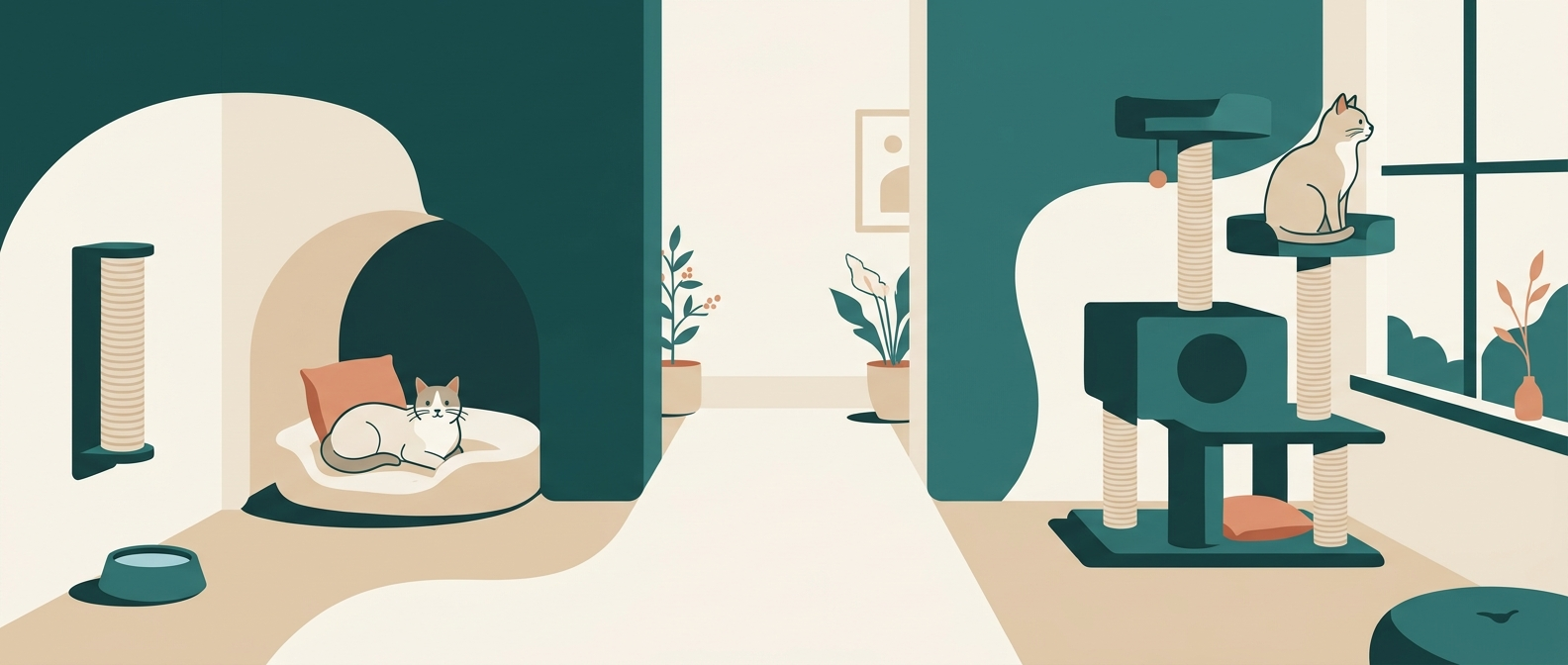
Current reading order
Go deeper without losing the safety sequence.
Each article links back to this pillar and onward to the most useful next guide. More supporting pages will be added only when they provide a distinct, evidence-aware answer.
- 02
How many litter boxes for two or three cats—and where to put them
For two or three cats, start with one litter box per cat plus one, then spread boxes across calm locations with open approach and exit routes.
How to use this pillar
Start with the boundary, then follow the question you can actually observe.
Health and welfare guidance keeps its veterinary boundary. Product comparisons state their evidence limits. Pico’s household story stays visibly separate from general guidance.
Tables and checklists include plain-language summaries so the conclusion remains clear to readers, screen readers, search crawlers, and answer engines.