Pillar guide 02 / 08
The cat-first litter-box setup: size, location, access, and box type
There is no single litter-box design that suits every cat. Start with easy access, enough room to turn, a calm route with an exit, and a familiar manual option. Compare open, covered, high-sided, low-entry, and automatic designs through gradual, one-variable trials.
Good litter-box design is less about a universal winner and more about fit: body size, mobility, location, noise, routes through the home, and the cat’s response. This hub keeps those variables visible so a product category does not become a health claim.
The current guides cover fair open-versus-covered trials, Pico’s one-variable reset, and a safety framework for automatic boxes. Future additions will address measurement, small-flat placement, entry styles, and multi-cat escape routes.
Start with the cornerstone
Covered vs open litter boxes: what the evidence says—and how to run a fair home trial
Covered or open litter box? A small study found no overall winner. See the evidence, safety checks, and a fair one-variable-at-a-time home trial.
Read the cornerstone guide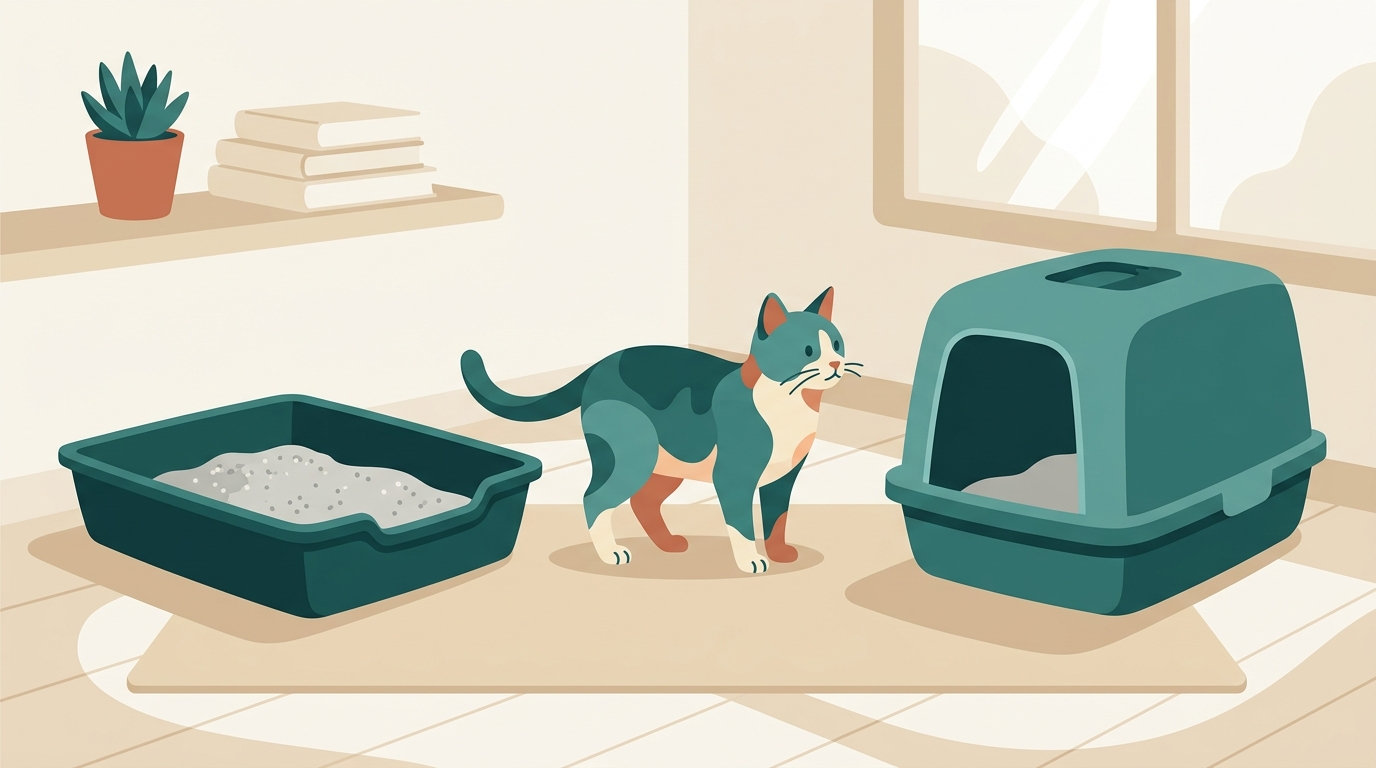
Current reading order
Go deeper without losing the safety sequence.
Each article links back to this pillar and onward to the most useful next guide. More supporting pages will be added only when they provide a distinct, evidence-aware answer.
- 02
Pico’s seven-day litter-box reset: what we changed, one variable at a time
A candid, vet-first seven-day litter-box reset from Pico’s family: one change at a time, what we watched, what did not help, and the log we wish we had used.
- 03
The safest automatic litter boxes: what to look for (and what to avoid)
Learn how to judge automatic litter-box safety: opening geometry, sensors, re-entry, fail-safe behavior, cat limits, and manual fallback.
How to use this pillar
Start with the boundary, then follow the question you can actually observe.
Health and welfare guidance keeps its veterinary boundary. Product comparisons state their evidence limits. Pico’s household story stays visibly separate from general guidance.
Tables and checklists include plain-language summaries so the conclusion remains clear to readers, screen readers, search crawlers, and answer engines.